The international assurance and ethics landscape is undergoing its most comprehensive structural overhaul in decades. From dedicated standards for Less Complex Entities to global ESG assurance frameworks and revised fraud obligations, practitioners and finance teams must adapt early to maintain audit readiness.
1. ISA for LCE (International Standard on Auditing for Less Complex Entities)
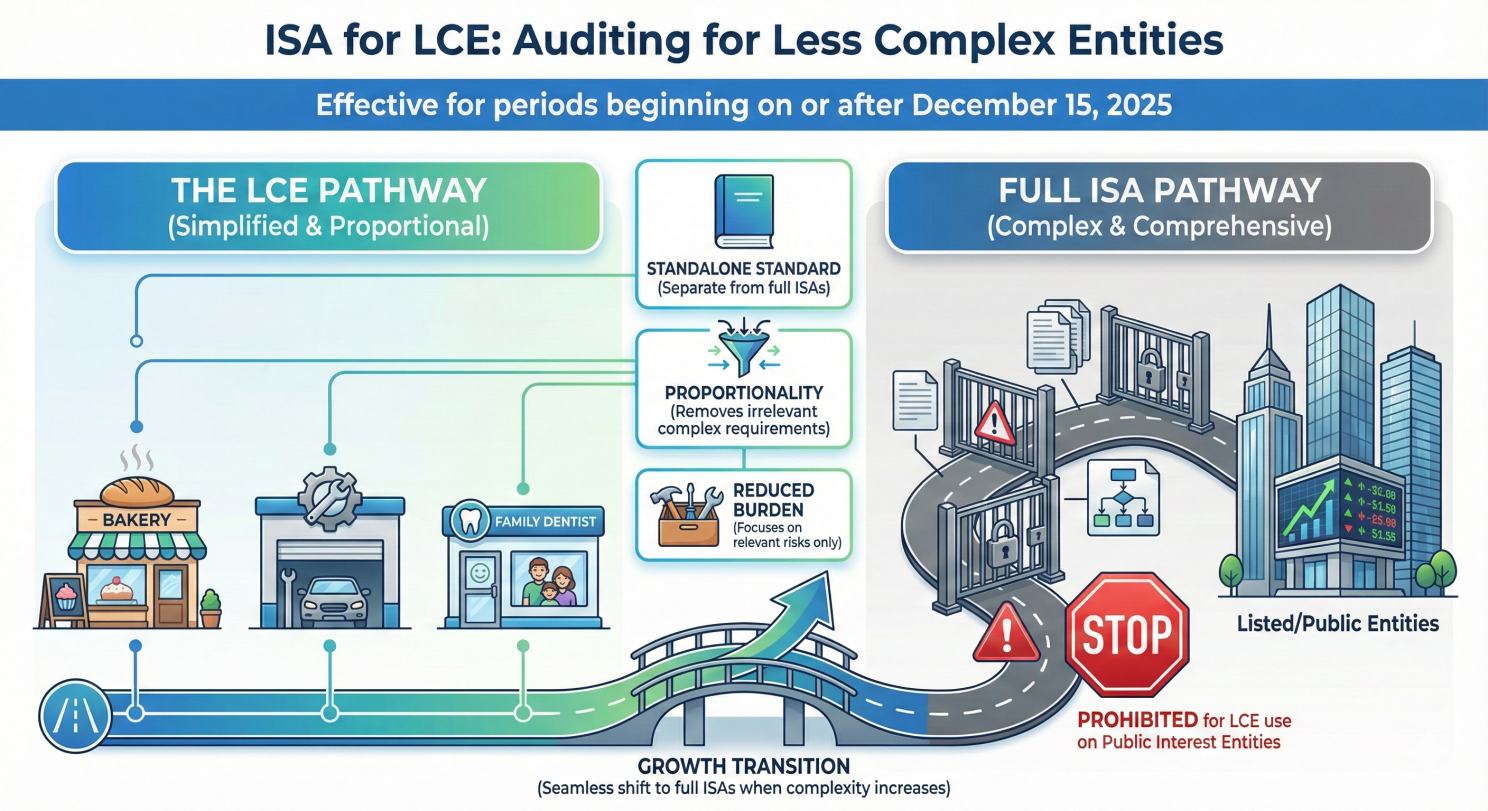
Effective Date: Audits of financial statements for periods beginning on or after December 15, 2025.
Key Provisions:
- A Standalone Standard: This is not a summarized version of the ISAs; it is an entirely separate, self-contained standard designed specifically to eliminate disproportionate administrative burdens on auditors of non-complex entities.
- Proportionality: It removes requirements irrelevant to non-complex businesses, such as complex group audit mechanisms or intricate automated internal control evaluations when not applicable.
- Strict Prohibitions: It cannot be applied to Listed Entities (publicly traded companies) or entities possessing significant public interest characteristics.
- The Transition Pathway: Designed with a structured growth pathway, permitting auditors to transition back into full ISAs if the client’s operational or corporate complexity increases.
2. ISSA 5000 (General Requirements for Sustainability Assurance Engagements)
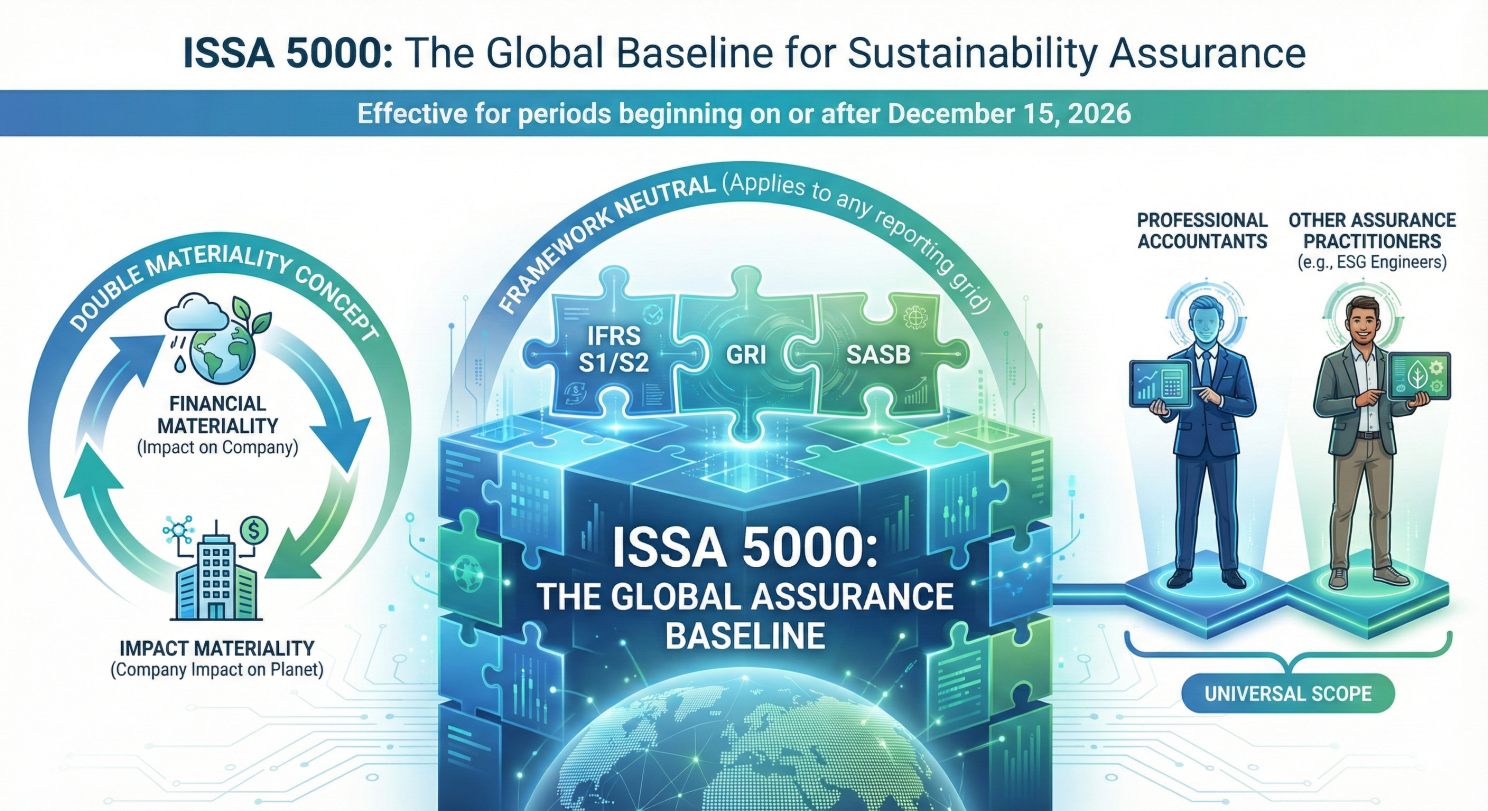
Effective Date: Assurance engagements for sustainability reports for periods beginning on or after December 15, 2026.
Key Provisions:
- Framework Neutrality: Acts as the global baseline, functioning seamlessly regardless of which reporting framework the client implements (e.g., IFRS S1/S2, GRI, SASB).
- Double Materiality: Purpose-built to accommodate double materiality—evaluating both the financial impact of ESG factors on enterprise value and the entity’s external impact on environment and society.
- Universal Scope: Governs all assurance practitioners, including multidisciplinary experts and non-accountants (such as environmental scientists or engineers), ensuring consistency.
- Work Effort Clarity: Clearly defines and distinguishes the procedural effort and evidentiary thresholds required for "Limited Assurance" versus "Reasonable Assurance."
3. ISA 570 (Revised 2024): Going Concern
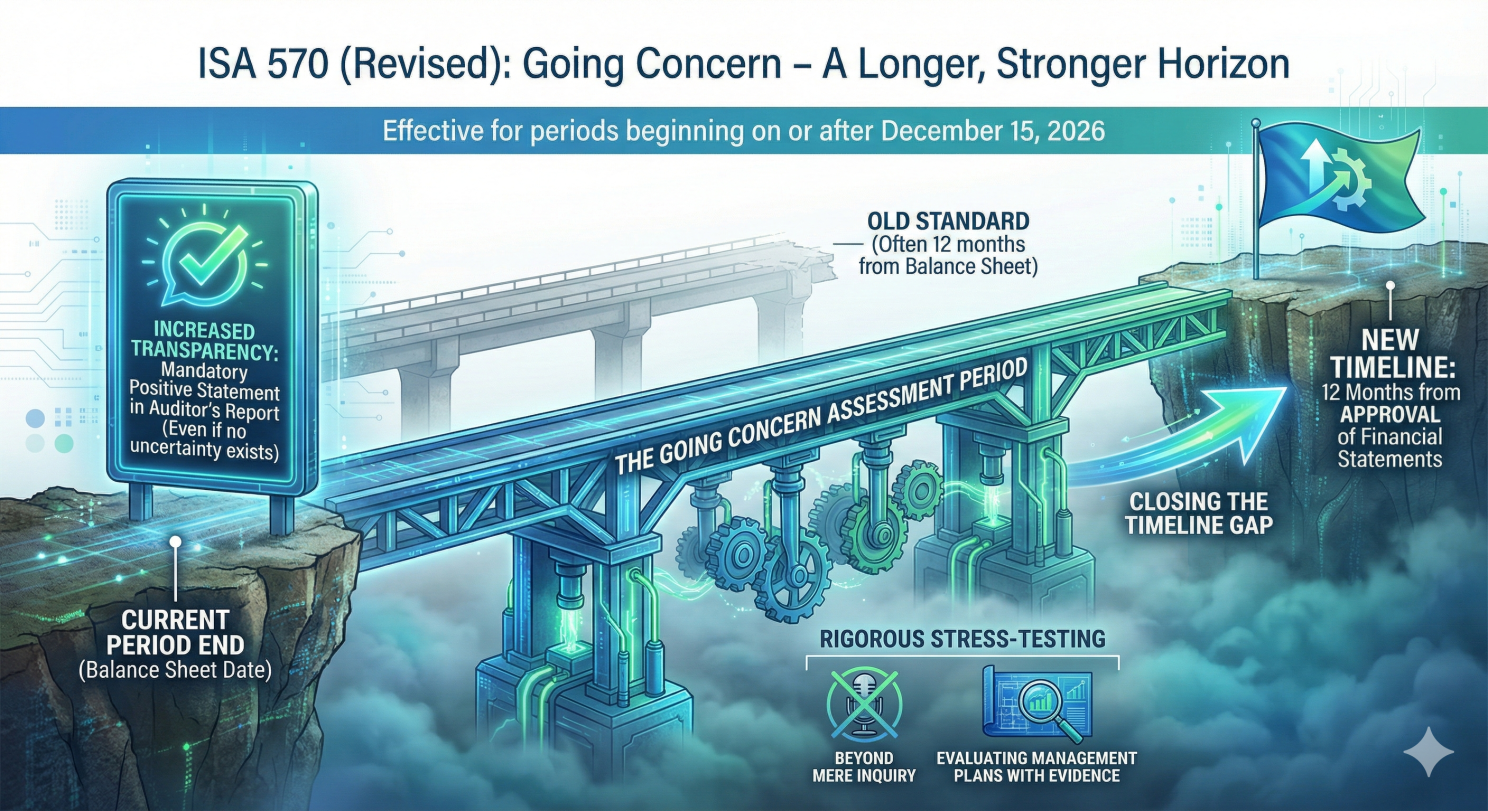
Effective Date: Audits of financial statements for periods beginning on or after December 15, 2026.
Key Provisions:
- Extended Horizon: The auditor is now obligated to evaluate management’s going concern assessment for at least 12 months from the date of approval of the financial statements, closing the vulnerability where auditors previously looked only 12 months from balance sheet date.
- Evidence Over Inquiry: Demands robust substantive corroboration to test management’s future turnaround or operational plans. Passive inquiry alone is no longer sufficient; auditors must obtain hard evidence backing feasibility.
- Transparent Reporting: Mandates a clear, positive statement in the independent auditor’s report on the appropriateness of management’s use of the going concern basis, even when no material uncertainty exists.
4. ISA 240 (Revised): The Auditor’s Responsibilities Relating to Fraud
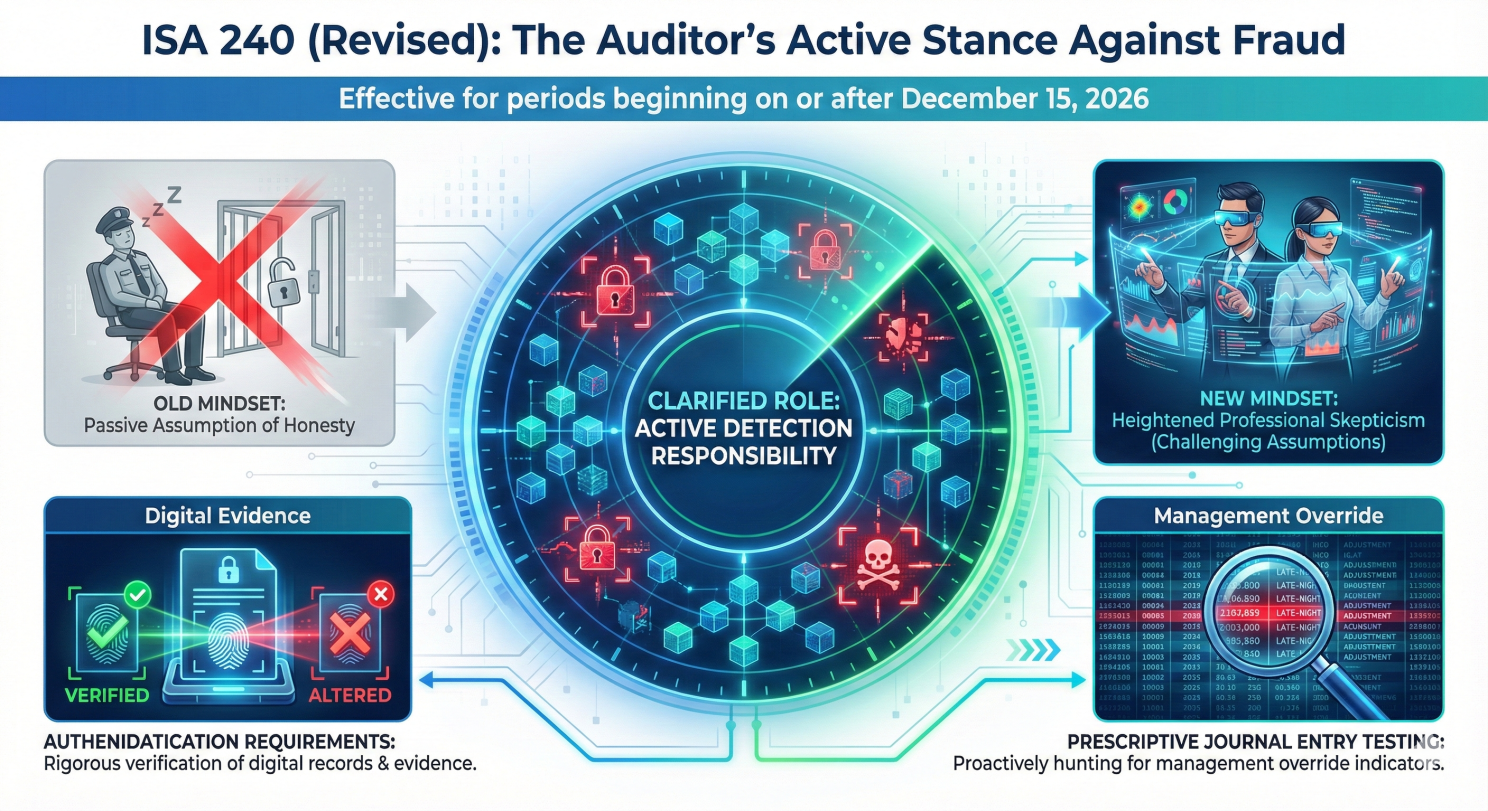
Effective Date: Audits of financial statements for periods beginning on or after December 15, 2026.
Key Provisions:
- Closing the Expectation Gap: Explicitly sharpens the auditor’s affirmative responsibility to identify material fraud risks, directly challenging passive assumptions of management honesty.
- Digital Evidence Authentication: Imposes new procedures addressing the authenticity of electronic records and digital workflows, requiring auditors to account for digital document alteration risks.
- Prescriptive Journal Entry Testing: Introduces strict, standardized requirements for testing manual journal entries and management overrides of internal controls.
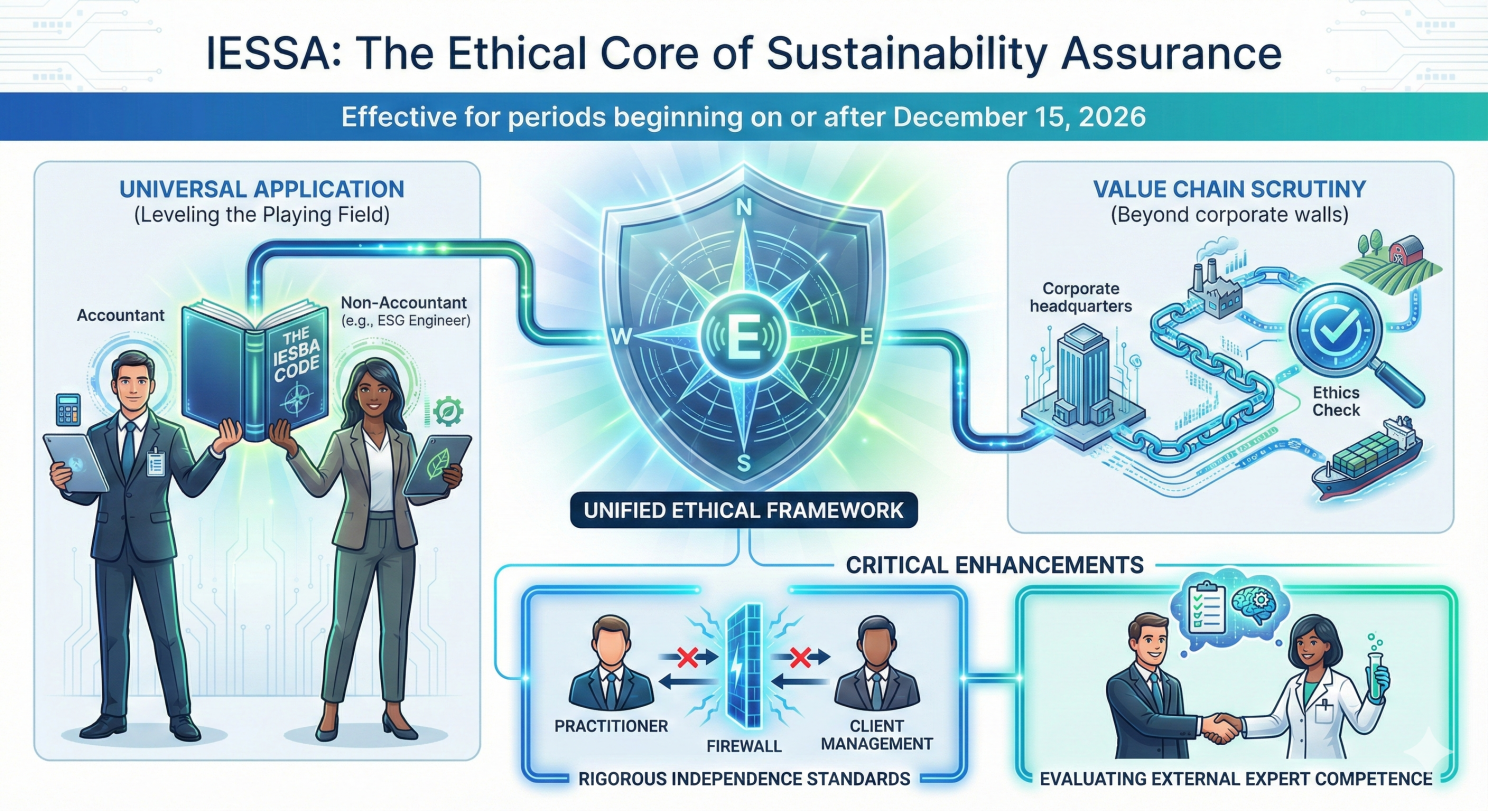
5. IESSA (Ethics for Sustainability Assurance) & Use of Experts
Effective Date: Periods beginning on or after December 15, 2026.
Key Provisions:
- Unified Ethics: Establishes a rigorous ethics and independence framework applying equally to accountant and non-accountant sustainability practitioners.
- Value Chain Complexity: Directly tackles the independence and confidentiality challenges of assuring data originating outside client walls (such as Scope 3 supplier carbon emissions).
- Evaluating External Experts: Significantly tightens requirements for verifying the objectivity, competence, and methodology of external technical specialists before their findings qualify as audit evidence.
6. Strategic Implementation Roadmap (2025–2027)
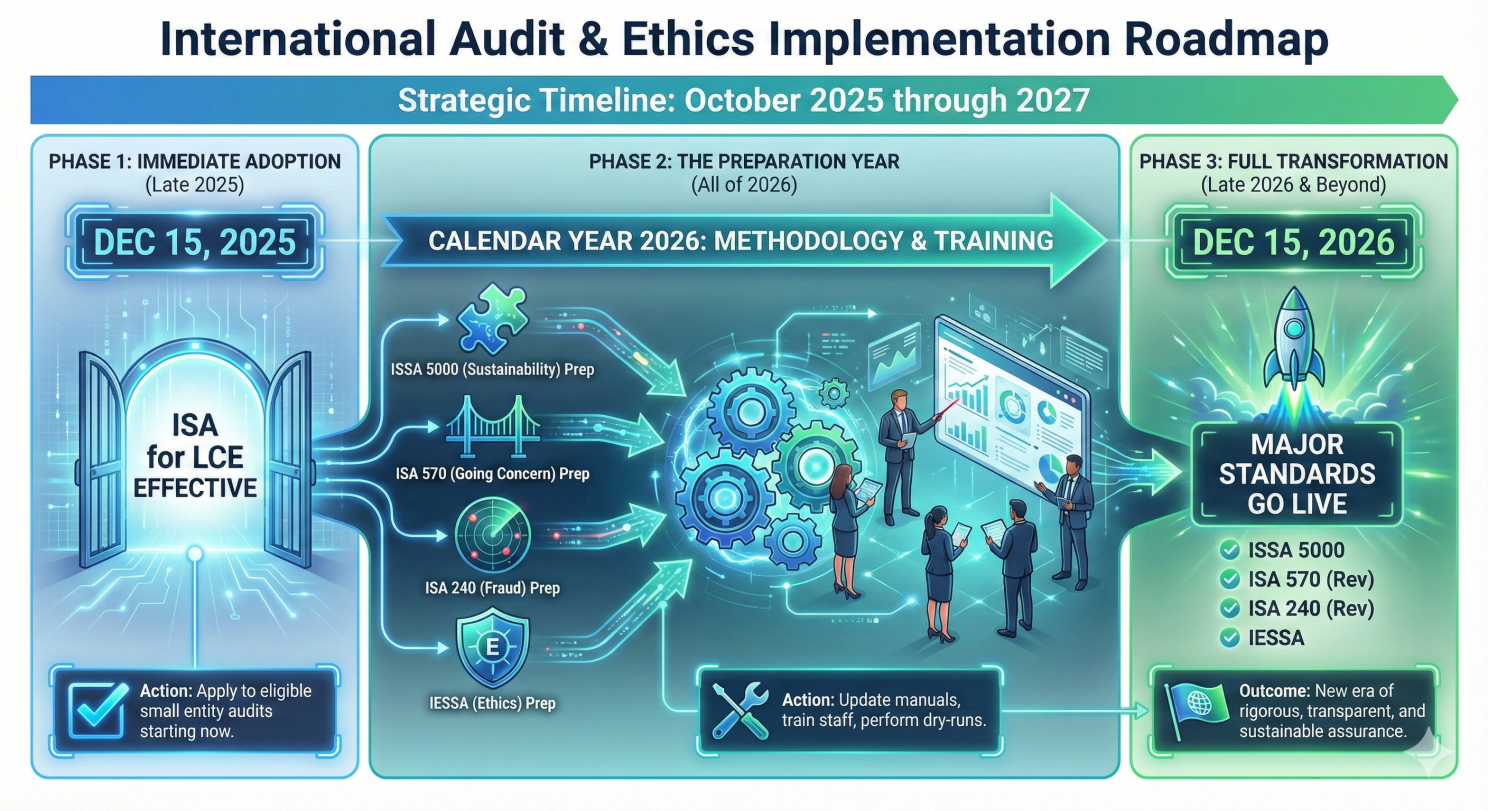
- Immediate Action (Late 2025): The ISA for LCE takes effect. Firms should identify eligible non-complex clients and prepare methodology. Note: Philippine regulatory bodies (BOA/PRC) are anticipated to release local threshold guidelines defining eligible Less Complex Entities.
- The Preparation Year (2026): While ISSA 5000, ISA 570, and ISA 240 take effect for periods ending December 2026, waiting until Q4 creates grave operational risks. 2026 must be used for training, updating audit working paper software, and client education.
- Full Transformation (Late 2026): By December 15, 2026, the comprehensive ecosystem for Sustainability Assurance, Fraud Detection, and Going Concern will be fully live.